
The Botanical
Five Thousand Years of Chamomile
The most used herbal remedy in history — what it actually does, what it blends with, and why it still belongs in your evening cup.
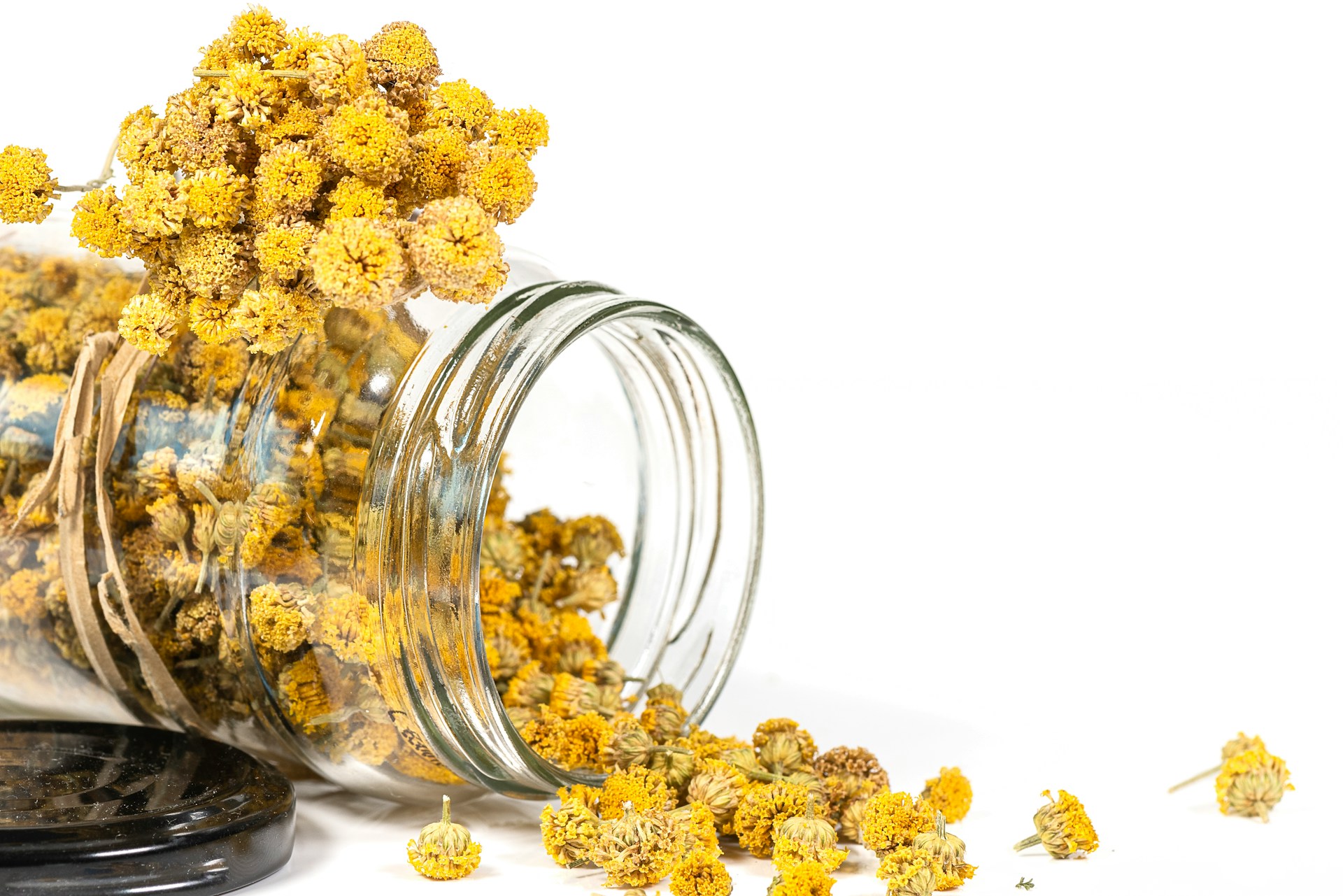
Chamomile was sacred to the ancient Egyptians. They dedicated it to Ra, their sun god — drawn to the small golden centre of the dried flower, and to the relief it offered the sleepless and the restless. This is not a new plant. It is one of the oldest cultivated herbs in the world.
How it spread
The Romans carried chamomile across Europe — pressed into military kits alongside the practical things, valued for its calming qualities and ease of use. Medieval monastery gardens grew it as a standard herb alongside rosemary and lavender. The Germans called it alles zutraut — roughly, 'capable of everything.' European herbalists knew it as the 'mother herb.' Whatever they called it, every culture that encountered it found a reason to keep it close.
"His mother put him to bed, and made some chamomile tea: One table-spoonful to be taken at bedtime." — Beatrix Potter, The Tale of Peter Rabbit (1902)
There are two species used today. German chamomile (Matricaria chamomilla) is the one found in most herbal teas — a higher concentration of the active compounds and a lighter, more apple-like flavour. Roman chamomile is more commonly used in aromatherapy. For a tea blend, German chamomile is what you want.
What it actually does — the GABA pathway
GABA — gamma-aminobutyric acid — is the brain's primary inhibitory neurotransmitter. When the nervous system is running fast, when thoughts are cycling and the mind is conducting its late-night review of everything, GABA slows it down. It is the nervous system's natural off-switch: when GABA binds to its receptors, it reduces the rate at which neurons fire, creating the conditions for calm.
Chamomile contains a natural compound called apigenin, which works with the brain's own calming chemistry. It is not a sedative. It does not knock you out. What it does is gently ease the body toward rest — lowering the resistance to a process the body already knows how to carry out. Think of it less as switching sleep on, and more as quietly getting out of the way.
The alignment between five thousand years of traditional use and what researchers have more recently been examining is not something to overlook. The qualities that herbalists valued across centuries are the same properties now the subject of ongoing scientific interest. That kind of convergence is relatively rare, and worth noting.
What chamomile blends with
Chamomile works well on its own. It works better in combination — and the pairings that herbalists reached for across centuries are not accidental.
Lavender is the most natural companion. Its primary active compound, linalool, also interacts with GABA receptors — approaching the same pathway from a slightly different angle. Together, chamomile and lavender create a more complete quieting effect than either achieves alone. There is also a natural flavour harmony: chamomile's soft apple-sweetness and lavender's cool floral depth complement each other without competing. It is one of the oldest and most intuitive pairings in botanical tea.
Valerian root has been used as a sleep herb since ancient Greece — Hippocrates wrote about it in the fifth century BC, and it has appeared in European herbal traditions ever since. It works through a different but complementary route to chamomile, supporting the body's natural winding-down process from another angle. The two have been paired for centuries, and there is also a practical reason: valerian has a strong, earthy taste on its own that not everyone takes to. Chamomile softens it considerably.
Passionflower adds another GABA-linked dimension and a subtle fruity note. Linden — the flower used in French tisane traditions for centuries — brings a honeyed warmth. Rose petals offer a gentle floral layer that sits alongside chamomile without competing with it.
"I drink red wine every night and chamomile tea before bed." — Connie Nielsen, actress
These are not random pairings. They are combinations that herbalists reached for independently, across different cultures and centuries. That consistency is its own form of evidence.
How to brew it
Chamomile needs time. Seven to ten minutes at around 90 degrees — not the hurried two-minute steep most people give it. It should taste like something: faintly apple, faintly floral, with a soft warmth that lingers. If yours tastes of nothing, it needed longer. The colour should be a clear, pale gold.
The right moment is around two hours before sleep — far enough from dinner that the body has settled, close enough to when you want to rest that it can do its work.
Seven minutes of patience. That is the whole of it, really — the kettle, the colour slowly deepening to pale gold, the first apple-sweet note rising with the steam. Chamomile has been asking this much of people for five thousand years. It seems a reasonable request.
The Tea Blend Studio blends are food products made from culinary botanicals. Nothing on this site constitutes medical advice. If you have a health condition or are taking medication, please consult a healthcare provider before adding herbal teas to your routine.