
Indian Tea Tradition
India
Four blends drawn from the spice gardens of Kerala, the high-altitude estates of Darjeeling, and the sacred tulsi traditions of Ayurveda.
Provenance
India is the world's second largest tea producer — and the most historically significant for the Western world. Assam's black teas, grown in the Brahmaputra valley, are the foundation of most British and Irish breakfast blends. Darjeeling, high in the Himalayan foothills, produces the most expensive and sought-after teas on earth. The base teas in this collection are sourced from single-estate producers in Assam and the Nilgiri hills of Tamil Nadu. The spices have never left India — cardamom from Kerala's Western Ghats (which produces the world's finest), ginger from Meghalaya and Kerala, cinnamon from small Tamil Nadu producers, turmeric from Andhra Pradesh. Tulsi — holy basil — is sourced from organic growers in Madhya Pradesh. These are ingredients India has been growing and using for thousands of years.
Golden Chai
The Spice Merchant's Cup
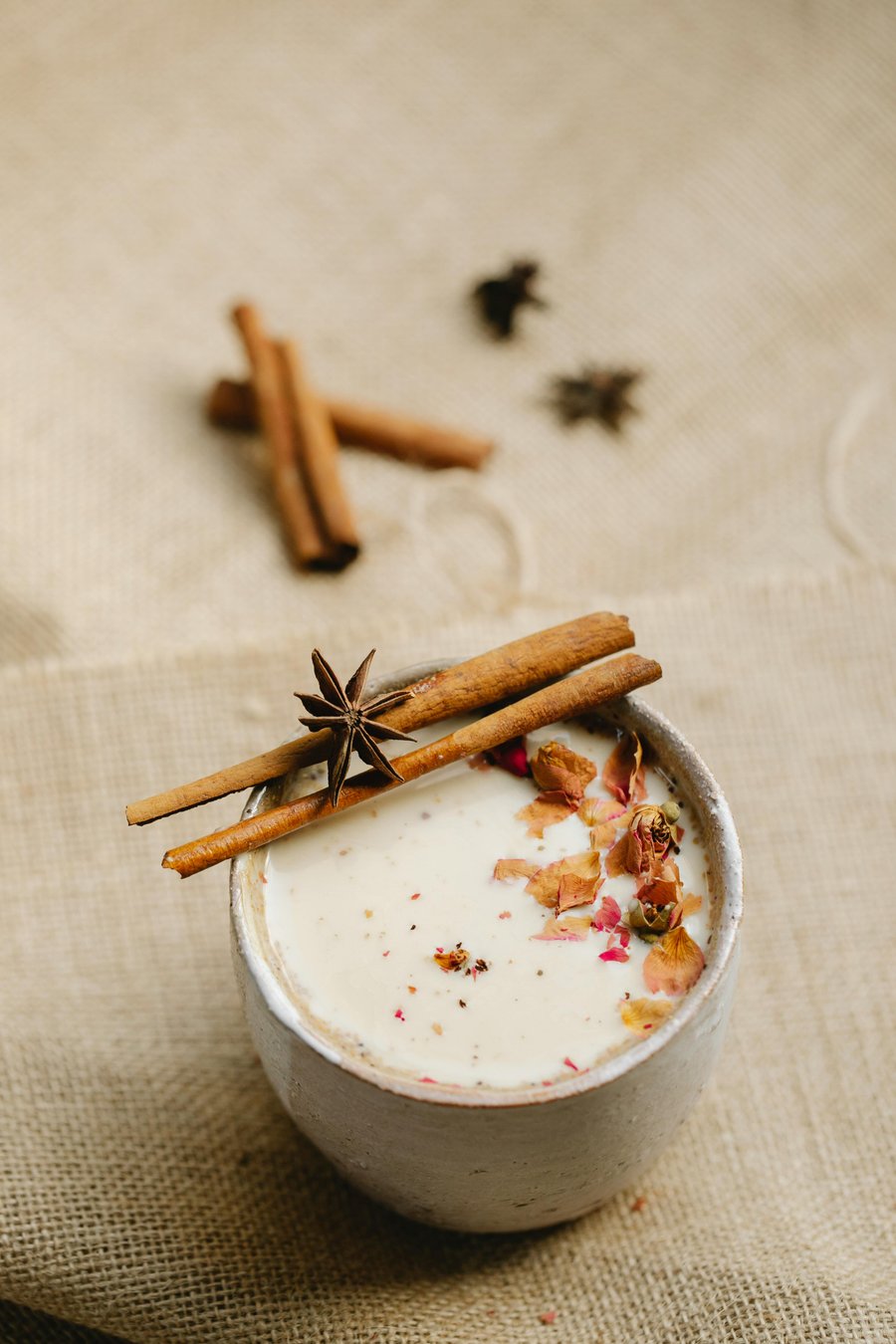
Chai is not a style of tea — it is a philosophy of warmth, generosity, and the correct deployment of spice. This is a masala chai built around the Indian triad of cardamom, ginger, and cinnamon, deepened with turmeric's golden earthiness. Bold Assam black tea holds everything together without apology. Strong, warming, and entirely unsubtle. The correct cup for cold mornings and difficult days.
Botanicals
Black Tea · Cardamom · Ginger · Cinnamon · Turmeric
Brewer's Note
Steep strong. Lightly crush the cardamom pods before adding — the oils need to be released. A small pinch of black pepper with the turmeric deepens both flavour and absorption.
Tulsi Sunrise
The Ayurvedic Morning
In Ayurveda, the day begins before the body is ready. Tulsi — holy basil — is the sacred plant of the Hindu household, kept in the courtyard and taken as tea each morning as an act of ritual as much as wellness. Its complex clove-pepper character is balanced here by ginger's reviving warmth and lemon verbena's bright citrus lift. A caffeine-free morning that asks nothing of you but presence.
Botanicals
Holy Basil · Ginger · Lemon Verbena · Lemon Balm
Brewer's Note
Tulsi benefits from a full steep — 5 to 7 minutes draws its full adaptive complexity. The lemon verbena brightens and the ginger gently invigorates. Caffeine-free.
Rose Darjeeling
The Queen of Blends
Darjeeling — grown in the Himalayan foothills at altitudes above 6,000 feet — is sometimes called the Champagne of teas. Its muscatel character, that distinctive floral grape note, is unlike any other tea on earth. Here it meets the traditions of Mughal rose culture: rose petals for the heart, cardamom for warmth, and a thread of saffron for the colour and mood of the Rajasthani court. Refined, complex, and quietly opulent.
Botanicals
Black Tea · Rose Petals · Cardamom · Saffron
Brewer's Note
Soak the saffron in a tablespoon of warm water for 5 minutes before adding to release the crocin fully. A single cardamom pod, lightly cracked, used in place of ground gives a more elegant result.
Kerala Spice
The Western Ghats
The Western Ghats — the mountain range that runs the length of Kerala's spine — is the spice capital of the world. Cardamom grows wild at altitude. Black pepper cascades from climbing vines. Cinnamon and turmeric cover the lower slopes. This blend brings the Ghats into the cup: black tea, Kerala cardamom, warming cinnamon, a note of turmeric, and holy basil's sacred adaptogenic quality.
Botanicals
Black Tea · Cardamom · Cinnamon · Turmeric · Holy Basil
Brewer's Note
Steep strong — the spices need time to fully open. A small pinch of black pepper with the turmeric deepens both flavour and absorption.